
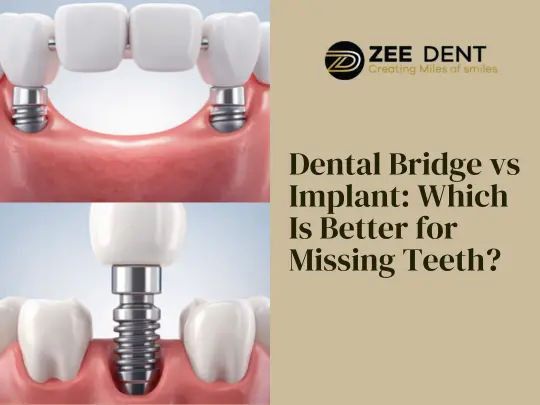
Dental Bridge vs Implant: Which Is Better for Missing Teeth?
Replacing missing teeth is essential for maintaining oral health, proper chewing, and facial structure. Two of the most common treatment options are dental bridges and dental implants. Patients often ask which option is better, leading to the important comparison of dental bridge vs implant.
Both solutions restore function and appearance, but they differ significantly in terms of procedure, durability, cost, and long-term impact on oral health. Understanding these differences can help you make a confident, informed decision.
What Is a Dental Bridge?
A dental bridge replaces a missing tooth by anchoring an artificial tooth to the neighboring natural teeth. These adjacent teeth are reshaped to support crowns that hold the bridge in place.
Key characteristics of dental bridges:
- Relies on surrounding natural teeth for support
- Typically completed within a few weeks
- Suitable when adjacent teeth already need crowns
- Does not replace the tooth root
Dental bridges are a long-established solution and may be appropriate in certain clinical situations.
What Is a Dental Implant?
A dental implant replaces both the tooth and its root. A titanium post is surgically placed into the jawbone, where it fuses with the bone. A crown is then attached to restore the visible tooth.
Key characteristics of dental implants:
- Independent of neighboring teeth
- Helps preserve jawbone density
- Longer treatment timeline due to healing
- Designed for long-term or permanent use
Dental implants closely mimic natural teeth in function and appearance.
Dental Bridge vs Implant: Key Differences
1. Longevity and Durability
When comparing dental bridge vs implant, longevity is a major factor.
- Dental bridges typically last 7 to 15 years
- Dental implants often last 20 years or longer, and in many cases, a lifetime
Implants generally offer superior long-term durability with proper care.
2. Impact on Oral Health
Dental implants preserve jawbone structure by stimulating bone growth, reducing bone loss over time. Dental bridges do not prevent bone resorption under the missing tooth area.
Additionally, bridges require reshaping healthy adjacent teeth, while implants leave surrounding teeth untouched.
3. Procedure and Recovery Time
Dental bridges usually require fewer appointments and no surgery, making them faster to complete. Dental implants involve a surgical procedure and healing period, but provide a more stable foundation.
The choice often depends on medical history, bone health, and patient preference.
4. Cost Considerations
Initial costs for dental bridges are generally lower than implants. However, implants may be more cost-effective long term due to their extended lifespan and lower replacement frequency.
Cost should be evaluated alongside durability and maintenance needs.
Which Option Is Better for Missing Teeth?
The answer to dental bridge vs implant depends on individual circumstances such as:
- Bone density and gum health
- Number of missing teeth
- Budget and timeline
- Long-term oral health goals
Dental implants are often preferred for single-tooth replacement and long-term stability, while dental bridges may be suitable for patients seeking a quicker, non-surgical solution.
People Also Ask
1. Is a dental implant better than a bridge?
In many cases, dental implants offer better longevity, bone preservation, and independence from surrounding teeth, but suitability depends on individual oral health.
2. How long does a dental bridge last compared to an implant?
Dental bridges usually last up to 15 years, while dental implants can last decades with proper care.
3. Does a dental implant look more natural than a bridge?
Both options look natural, but implants often feel more like natural teeth because they are anchored into the jawbone.
Conclusion
Choosing between a dental bridge and an implant requires understanding the differences in durability, oral health impact, and long-term value. When comparing dental bridge vs implant, implants generally offer greater longevity and structural benefits, while bridges provide a faster, less invasive alternative.
A professional dental evaluation is essential to determine the most suitable option for your specific needs.