
How Does a Dental Crown Work? Procedure, Benefits and Lifespan
A damaged or weakened tooth doesn’t always need to be removed. In many cases, a dental crown can restore its strength, function, and appearance while preserving the natural tooth. If you’ve been advised to get a crown, you may be wondering how does a dental crown work and what to expect during treatment.
Understanding how dental crowns protect and strengthen teeth can help you make an informed decision about your oral health.
What Is a Dental Crown?
Before understanding how does a dental crown work, it’s important to know what a dental crown is.
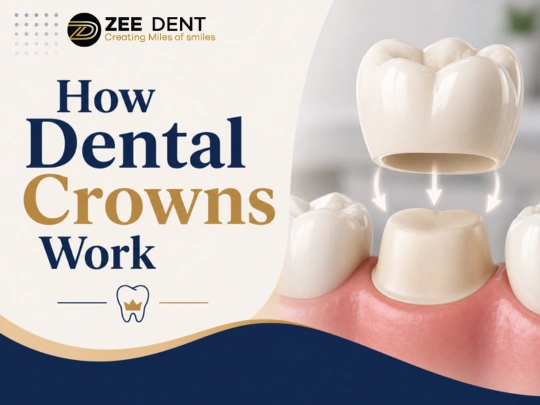
A dental crown is a custom-made cap that completely covers the visible portion of a damaged tooth. It restores the tooth’s shape, size, strength, and appearance while protecting it from further damage.
Dental crowns are commonly made from materials such as:
- Porcelain
- Ceramic
- Zirconia
- Metal alloys
- Porcelain fused to metal (PFM)
Your dentist will recommend the most suitable material based on the tooth’s location, function, and aesthetic requirements.
How Does a Dental Crown Work?
A dental crown works by completely covering and protecting a weakened or damaged tooth. Once bonded into place, it acts like a protective outer shell, allowing the tooth to function normally while preventing further fractures or wear.
The crown distributes biting forces evenly across the tooth, making it easier to chew comfortably and protecting the remaining natural tooth structure.
Unlike fillings, which repair only part of a tooth, a crown restores the entire visible portion, providing greater strength and durability.
When Is a Dental Crown Needed?
A dentist may recommend a crown for several reasons.
To Protect a Weak Tooth
Teeth weakened by large fillings, decay, or cracks can fracture under normal chewing pressure. A crown reinforces the tooth and reduces the risk of further damage.
After Root Canal Treatment
Following root canal therapy, teeth often become more brittle. A dental crown helps protect the treated tooth and restores its function.
To Restore Broken Teeth
Crowns rebuild teeth that have been chipped, fractured, or severely worn down.
To Replace Large Fillings
When too much natural tooth structure has been lost, a crown provides better long-term support than another filling.
To Improve Appearance
Dental crowns can enhance the appearance of:
- Discolored teeth
- Misshapen teeth
- Severely worn teeth
To Complete a Dental Implant
After a dental implant integrates with the jawbone, a crown is attached to restore the appearance and function of the missing tooth.
Dental Crown Procedure: Step by Step
Understanding the process helps answer how does a dental crown work in practice.
Initial Examination
Your dentist examines the tooth using clinical evaluation and X-rays to determine whether a crown is appropriate.
Tooth Preparation
A small amount of enamel is removed to create space for the custom crown.
If significant tooth structure is missing, the dentist may build up the tooth before preparing it.
Digital Scan or Impression
A digital scan or dental impression is taken to create a crown that fits precisely.
Temporary Crown
While your permanent crown is being fabricated, a temporary crown protects the prepared tooth.
Permanent Crown Placement
During the second appointment, your dentist:
- Removes the temporary crown
- Checks the fit and bite
- Bonds the permanent crown securely in place
- Makes any necessary adjustments
Once completed, the crown functions similarly to a natural tooth.
Benefits of Dental Crowns
Dental crowns offer several advantages.
Restores Tooth Strength
Crowns reinforce weakened teeth, allowing normal chewing and biting.
Protects Natural Teeth
They help prevent further fractures and preserve healthy tooth structure.
Improves Appearance
Modern porcelain and ceramic crowns closely resemble natural teeth.
Long-Lasting Solution
With proper care, crowns can provide many years of reliable function.
Comfortable to Use
Once adjusted correctly, most patients quickly adapt to eating and speaking normally.
Types of Dental Crowns
Several materials are available depending on your needs.
Porcelain Crowns
- Highly aesthetic
- Excellent for front teeth
- Natural appearance
Ceramic Crowns
- Metal-free
- Strong and aesthetic
- Suitable for patients with metal allergies
Zirconia Crowns
- Extremely durable
- Highly resistant to fractures
- Suitable for both front and back teeth
Metal Crowns
- Exceptional strength
- Often used for molars
- Less commonly selected for visible teeth
Porcelain Fused to Metal (PFM)
- Combines strength with aesthetics
- Suitable for many restorative cases
How Long Does a Dental Crown Last?
The lifespan of a crown depends on several factors.
Most dental crowns last:
- Porcelain crowns: 10 to 15 years
- Zirconia crowns: 15 years or longer
- Metal crowns: Often 15 to 20 years or more
Proper oral hygiene and regular dental checkups help extend their lifespan.
How to Care for a Dental Crown
To keep your crown in good condition:
- Brush twice daily with fluoride toothpaste
- Floss around the crown every day
- Avoid chewing ice or very hard foods
- Wear a night guard if you grind your teeth
- Visit your dentist for regular examinations
Although crowns cannot develop cavities, the natural tooth beneath them still requires proper care.
Frequently Asked Questions
Does getting a dental crown hurt?
The procedure is typically performed under local anesthesia, making it comfortable for most patients. Mild sensitivity may occur for a few days after treatment.
Can a dental crown fall off?
Although uncommon, crowns may become loose due to cement failure, decay beneath the crown, or trauma. If this happens, contact your dentist promptly.
Can you eat normally with a dental crown?
Yes. Once the permanent crown is securely placed and adjusted, most patients can eat, speak, and smile comfortably.
Conclusion
Understanding how does a dental crown work can help you feel more confident about restorative dental treatment. Dental crowns protect damaged teeth, restore normal function, and improve the appearance of your smile while preserving as much natural tooth structure as possible.
If you have a cracked, weakened, or heavily restored tooth, your dentist can determine whether a dental crown is the most suitable treatment for restoring your long-term oral health.