
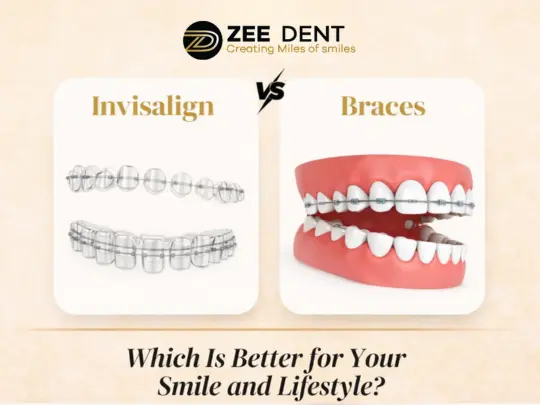
Invisalign vs Braces: Which Is Better for Your Smile and Lifestyle?
Choosing the right orthodontic treatment is about more than straight teeth. Comfort, appearance, daily habits, and long-term results all matter. This is why many patients compare Invisalign vs braces before starting treatment.
Both options effectively correct misaligned teeth and bite issues, but they work in different ways. Understanding these differences can help you select the treatment that best fits your smile goals and lifestyle.
What Is Invisalign?
Invisalign is a clear aligner system that uses a series of custom-made, removable trays to gradually shift teeth into alignment. The aligners are nearly invisible and designed for comfort.
Key features of Invisalign:
- Clear, removable aligners
- Easier oral hygiene during treatment
- Fewer in-clinic adjustments
- Suitable for mild to moderate alignment issues
Invisalign is often chosen by adults and teens who want a discreet orthodontic option.
What Are Traditional Braces?
Traditional braces use metal or ceramic brackets attached to the teeth and connected with wires. The orthodontist periodically adjusts the wires to move teeth into the desired position.
Key features of braces:
- Fixed to teeth and not removable
- Effective for complex bite and alignment problems
- Suitable for patients of all ages
- Continuous treatment without compliance concerns
Braces remain a reliable choice for comprehensive orthodontic correction.
Invisalign vs Braces: Key Differences
1. Appearance and Lifestyle Impact
When comparing Invisalign vs braces, appearance is often a deciding factor. Invisalign aligners are clear and subtle, while braces are more visible, even with ceramic options.
Invisalign aligners can be removed for eating and special occasions, making them easier to adapt to daily routines.
2. Comfort and Oral Hygiene
Invisalign aligners are smooth and generally cause less irritation to cheeks and gums. Braces may cause temporary discomfort after adjustments and can make brushing and flossing more challenging.
Removable aligners allow easier access for cleaning, which helps maintain oral health during treatment.
3. Treatment Effectiveness and Duration
Both Invisalign and braces can deliver excellent results when used correctly. Braces are often preferred for complex orthodontic cases, while Invisalign is ideal for mild to moderate corrections.
Treatment time varies based on individual needs and consistency with aligner wear.
4. Maintenance and Compliance
Invisalign requires discipline. Aligners must be worn for the recommended hours each day to stay on track. Braces work continuously, making them less dependent on patient compliance.
Choosing between Invisalign and braces depends on your ability to follow treatment instructions.
Which Option Is Right for You?
The decision between Invisalign vs braces depends on factors such as:
- Severity of alignment or bite issues
- Lifestyle and professional needs
- Comfort preferences
- Willingness to follow daily wear guidelines
A professional orthodontic evaluation is essential to determine the most suitable treatment option.
People Also Ask
1. Is Invisalign as effective as braces?
Invisalign is effective for many orthodontic issues, but braces may be better for complex cases involving severe misalignment or bite problems.
2. Which is faster, Invisalign or braces?
Treatment time varies for both. Invisalign may be quicker for mild cases, while braces are often more efficient for complex corrections.
3. Is Invisalign more expensive than braces?
Costs depend on treatment complexity and duration. Invisalign may cost slightly more in some cases, but pricing varies by provider.
Conclusion
Understanding the differences between Invisalign vs braces helps you make a confident decision about your orthodontic care. Both treatments offer proven results when guided by an experienced dental professional.
Choosing the right option ensures not only a straighter smile but also a treatment experience that fits your lifestyle and long-term oral health goals.