
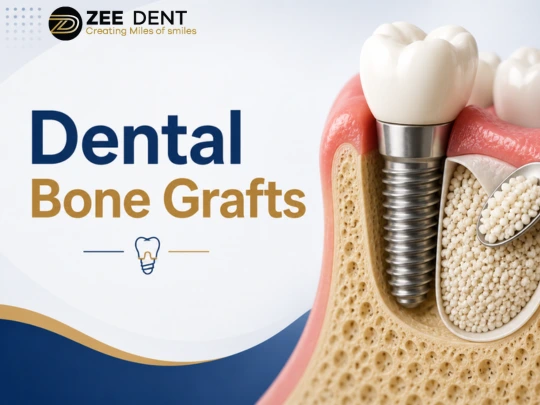
Dental Bone Grafts: When Are They Needed Before Dental Implants?
Dental implants are one of the most reliable solutions for replacing missing teeth. However, not every patient has enough healthy jawbone to support an implant immediately. In such cases, dental bone grafts may be recommended to rebuild bone and create a strong foundation for successful implant placement.
Understanding when a bone graft is necessary and how it supports implant treatment can help patients make informed decisions about their oral health.
What Are Dental Bone Grafts?
Dental bone grafts are procedures that add or regenerate bone in areas where the jawbone has become thin, weak, or insufficient. The graft material stimulates new bone growth, helping restore the volume and density needed to support dental implants.
Bone grafts are commonly used in implant dentistry to prepare the jaw for long-term implant stability and success.
Why Is Jawbone Important for Dental Implants?
Dental implants function as artificial tooth roots and are placed directly into the jawbone. For implants to integrate properly, there must be enough healthy bone available.
When bone volume is inadequate, implants may:
- Lack proper support
- Fail to integrate with the bone
- Become unstable over time
This is why dentists carefully evaluate bone quality before recommending implant treatment.
When Are Dental Bone Grafts Needed Before Dental Implants?
Not every implant patient requires a bone graft. However, dental bone grafts before dental implants may be necessary in several situations.
Bone Loss After Tooth Extraction
When a tooth is missing for an extended period, the surrounding jawbone begins to shrink because it no longer receives stimulation from the tooth root.
Over time, this can reduce the amount of bone available for implant placement.
Advanced Gum Disease
Periodontal disease can destroy the bone that supports teeth. Even after the infection is treated, significant bone loss may remain.
A bone graft may be required to rebuild the affected area before implants can be placed.
Facial Trauma or Injury
Accidents and injuries can damage the jawbone and create defects that make implant placement difficult.
Bone grafting helps restore the bone structure and improve implant success.
Congenital Bone Deficiencies
Some individuals naturally have thinner jawbones or insufficient bone volume in certain areas.
Bone grafting can help create the support necessary for implant treatment.
Sinus Bone Loss
In the upper back jaw, bone loss may occur near the sinus cavity. In some cases, a sinus lift combined with bone grafting may be needed before implant placement.
Types of Dental Bone Grafts
Several types of bone graft materials may be used depending on the patient’s condition.
Autograft
Bone is taken from another area of the patient’s body.
Benefits:
- Excellent compatibility
- Strong healing potential
Allograft
Bone material is obtained from a screened human donor source.
Benefits:
- No second surgical site
- Widely used and effective
Xenograft
Bone material is derived from animal sources and processed for safe use.
Benefits:
- Provides a scaffold for new bone growth
- Commonly used in implant dentistry
Synthetic Bone Grafts
Laboratory-created materials are designed to encourage natural bone regeneration.
Benefits:
- No donor site required
- Predictable results
What Happens During a Dental Bone Graft Procedure?
The procedure generally involves:
- Examination and treatment planning
- Local anesthesia for comfort
- Placement of bone graft material in the affected area
- Protection of the graft with a membrane if necessary
- Healing period to allow new bone formation
The procedure is typically performed under local anesthesia and is well tolerated by most patients.
How Long Does a Dental Bone Graft Take to Heal?
Healing time depends on the amount of bone regeneration required.
Typical healing periods include:
- Minor grafts: 3 to 4 months
- Moderate grafts: 4 to 6 months
- Extensive grafts: 6 to 9 months
Your dentist will monitor healing through follow-up visits and imaging before proceeding with implant placement.
Signs You May Need a Bone Graft Before an Implant
You may require dental bone grafts if you:
- Have been missing a tooth for many years
- Have experienced severe gum disease
- Have been told you have bone loss
- Need implants in areas with insufficient bone support
- Have suffered jaw trauma
A dental examination and imaging scan can determine whether grafting is necessary.
Benefits of Dental Bone Grafts
Improved Implant Success
A strong jawbone increases the likelihood of successful implant integration.
Better Long-Term Stability
Bone grafting helps provide lasting support for implants.
Restored Jaw Structure
The procedure helps preserve facial contours and jawbone shape.
Expanded Treatment Options
Patients previously considered unsuitable for implants may become eligible after grafting.
Are Dental Bone Grafts Safe?
Dental bone grafting is a well-established and predictable procedure when performed by qualified dental professionals.
Most patients experience only mild swelling and discomfort during the healing period. Following post-treatment instructions carefully helps ensure successful recovery.
Dental Bone Grafts and Implant Success Rates
One of the primary reasons dentists recommend dental bone grafts before dental implants is to improve treatment outcomes.
Adequate bone support allows implants to integrate properly with the jaw, creating a stable and functional replacement for missing teeth. With proper planning and healing, bone grafting significantly contributes to long-term implant success.
Conclusion
Dental bone grafts play an important role in modern implant dentistry by rebuilding lost bone and creating the support needed for successful implant placement. While not every patient requires grafting, it can be an essential step for those with bone loss, gum disease, or long-term missing teeth.
A thorough dental evaluation can determine whether bone grafting is necessary and help create the best treatment plan for achieving a healthy, long-lasting smile.