
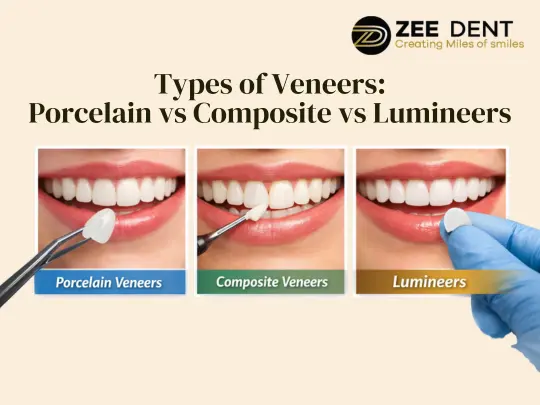
Types of Veneers: Porcelain vs Composite vs Lumineers
Dental veneers are one of the most popular cosmetic dentistry solutions for improving the appearance of teeth. If you are exploring smile enhancement options, understanding the different types of veneers is essential to making the right decision.
Veneers can correct discoloration, chips, gaps, and uneven teeth, but each type offers different benefits in terms of durability, cost, and appearance.
What Are Dental Veneers?
Before comparing the types of veneers, it is important to understand what they are.
Dental veneers are thin, custom-made shells that are bonded to the front surface of teeth. They are designed to improve the shape, size, color, and overall appearance of your smile while maintaining a natural look.
For a complete understanding, read our detailed guide on what are teeth veneers.
Main Types of Veneers
There are three commonly used types of veneers in modern dentistry:
- Porcelain veneers
- Composite veneers
- Lumineers
Each option is suited to different needs, budgets, and aesthetic goals.
Porcelain Veneers
Porcelain veneers are made from high-quality ceramic material and are known for their natural appearance and long-lasting results.
Benefits of Porcelain Veneers
- Highly natural look with excellent color matching
- Strong resistance to stains
- Long lifespan, typically 10 to 15 years or more
- Durable and suitable for major smile transformations
Considerations
- Higher cost compared to other types
- Requires removal of a thin layer of enamel
- Usually completed in multiple visits
Porcelain veneers are ideal for patients seeking long-term results and a highly aesthetic finish.
Composite Veneers
Composite veneers are made from tooth-colored resin material and are applied directly to the teeth.
Benefits of Composite Veneers
- More affordable than porcelain veneers
- Can often be completed in a single visit
- Easier to repair if damaged
- Less invasive with minimal enamel removal
Considerations
- Shorter lifespan, typically 5 to 7 years
- More prone to staining over time
- Slightly less natural appearance compared to porcelain
Composite veneers are a suitable option for minor cosmetic corrections and budget-conscious patients.
Lumineers
Lumineers are a type of ultra-thin porcelain veneer that requires minimal or no tooth preparation.
Benefits of Lumineers
- Minimal or no enamel removal
- Less invasive procedure
- Reversible in some cases
- Natural and lightweight appearance
Considerations
- Not suitable for all dental conditions
- May not effectively mask severe discoloration
- Slightly higher cost compared to traditional veneers
Lumineers are ideal for patients who want a conservative cosmetic treatment with minimal alteration to natural teeth.
Comparison of Types of Veneers
Appearance
Porcelain veneers provide the most natural and translucent appearance. Composite veneers offer good results, while Lumineers provide a subtle enhancement.
Durability
Porcelain veneers last the longest, followed by Lumineers, while composite veneers have a shorter lifespan.
Cost
Composite veneers are the most affordable. Porcelain and Lumineers are higher in cost but offer longer-lasting results.
Procedure
Composite veneers require minimal preparation. Porcelain veneers involve enamel removal, while Lumineers require little to none.
Which Type of Veneer Is Right for You?
Choosing between the different types of veneers depends on:
- Your budget
- Desired results
- Condition of your teeth
- Long-term expectations
For long-lasting and premium aesthetics, porcelain veneers are often recommended. For quick and cost-effective improvements, composite veneers may be suitable. Lumineers offer a balance for those seeking a minimally invasive option.
A professional dental consultation is essential to determine the best option based on your individual needs.
If you are concerned about safety and long-term impact, read our guide on are veneers bad for your teeth.
Maintenance and Aftercare
Regardless of the type you choose, proper care is important for longevity.
- Brush and floss daily
- Avoid biting hard objects
- Limit stain-causing foods and drinks
- Visit your dentist regularly
Good oral hygiene helps maintain both veneers and natural teeth.
Conclusion
Understanding the different types of veneers helps you make a confident and informed decision about your smile transformation. Each option offers unique advantages, and the right choice depends on your goals, lifestyle, and dental condition.Consulting a qualified dentist ensures that your treatment plan is tailored to deliver natural, long-lasting results. If you are considering treatment, exploring dental veneers in Dubai can help you understand the most suitable option based on your needs.