
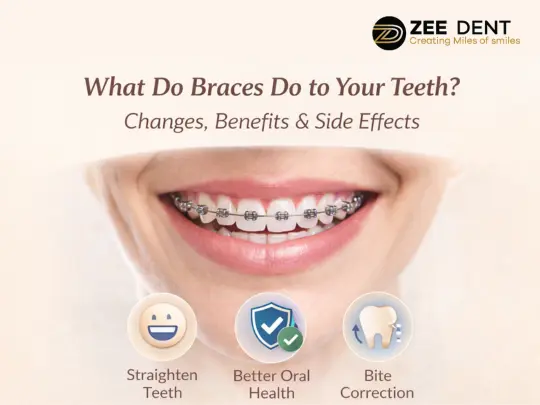
What Do Braces Do to Your Teeth? Changes, Benefits & Side Effects
Braces are one of the most effective orthodontic treatments for correcting misaligned teeth and improving your smile. But many patients wonder: what do braces do to your teeth and how do they actually work?
Understanding how braces move teeth, the changes you can expect, and their benefits can help you feel more confident about starting treatment.
What Do Braces Do to Your Teeth?
To understand what do braces do to your teeth, it helps to look at how they function.
Braces apply continuous, gentle pressure on teeth over time. This pressure gradually moves teeth into the correct position while reshaping the surrounding bone structure.
The process involves:
- Controlled tooth movement
- Bone remodeling around teeth
- Alignment of bite and jaw position
This allows braces to correct issues like crowding, gaps, and bite problems.
How Do Braces Work?
Braces consist of brackets, wires, and sometimes elastic bands that work together to guide teeth into alignment.
- Brackets are attached to each tooth
- Archwires apply pressure to move teeth
- Elastic bands help adjust bite alignment
Your dentist or orthodontist adjusts the wires periodically to ensure steady progress.
Changes You Can Expect During Braces Treatment
Braces gradually transform your teeth and smile over time.
Teeth Alignment Improves
Crowded or crooked teeth begin to straighten.
Gaps Close
Spaces between teeth are reduced or eliminated.
Bite Correction
Overbite, underbite, and crossbite issues are corrected.
Facial Aesthetics Improve
Proper alignment can enhance overall facial balance and appearance.
Speech and Chewing Improve
Aligned teeth can improve how you speak and chew food.
Benefits of Braces
Braces offer both cosmetic and functional advantages.
Straighter Smile
Improves overall appearance and confidence.
Better Oral Health
Aligned teeth are easier to clean, reducing the risk of cavities and gum disease.
Improved Bite Function
Enhances chewing efficiency and reduces jaw strain.
Long-Term Results
With proper retention, results can last a lifetime.
Side Effects of Braces
While braces are safe and effective, some temporary side effects are common.
Mild Discomfort
You may feel soreness after adjustments.
Difficulty Eating
Hard or sticky foods should be avoided.
Oral Hygiene Challenges
Braces require extra care while brushing and flossing.
Temporary Speech Changes
Some patients may notice slight speech changes initially.
These effects are usually temporary and manageable with proper care.
Results Timeline
The timeline for braces treatment varies depending on the complexity of the case.
Typical Timeline:
- First few weeks: Initial discomfort and adjustment
- 1 to 3 months: Visible alignment improvements
- 6 to 12 months: Significant changes
- 12 to 24 months: Full treatment completion
Your dentist will provide a personalized treatment plan based on your needs.
Who Should Consider Braces?
Braces are recommended for individuals who:
- Have crooked or crowded teeth
- Have gaps between teeth
- Experience bite issues
- Want to improve both function and appearance
A consultation helps determine the most suitable orthodontic treatment.
Tips for Taking Care of Braces
Proper care ensures smooth treatment and better results.
- Brush and floss regularly
- Avoid hard and sticky foods
- Attend regular dental checkups
- Follow your dentist’s instructions
Maintaining good oral hygiene is essential throughout treatment.
Conclusion
Now that you understand what do braces do to your teeth, it’s clear that they play a crucial role in improving both dental function and appearance. Braces gradually align teeth, correct bite issues, and enhance overall oral health.
With proper care and professional guidance, braces can deliver long-lasting results and a confident, healthy smile.